
What Is Lifestyle Yoga Therapy? A Scientific & Holistic Approach to Modern Health
Modern health challenges are no longer driven primarily by infectious diseases, but by lifestyle-related disorders such as chronic back pain, metabolic dysfunction, stress-related illnesses, sleep disturbances, and psychosomatic conditions. These conditions develop gradually through prolonged exposure to sedentary behavior, poor posture, chronic stress, disrupted sleep cycles, and unhealthy daily routines.
Lifestyle Yoga Therapy is an integrative, evidence-informed approach that combines classical yogic principles with modern health science to address these issues at their root. Unlike general yoga practice, Lifestyle Yoga Therapy focuses on correcting daily movement patterns, breathing habits, stress responses, sleep rhythms, and behavioral choices that influence long-term health outcomes. This article explores the scientific foundations, therapeutic framework, and holistic relevance of Lifestyle Yoga Therapy, explaining how yoga for modern lifestyle problems can be applied systematically for sustainable health, resilience, and functional well-being.
Introduction – The Crisis of the Modern Lifestyle
The modern lifestyle is characterized by convenience, speed, and constant stimulation—but often at the cost of physical and mental health. Sedentary behavior, prolonged screen exposure, irregular sleep cycles, processed diets, and chronic psychological stress have become normalized across age groups.
Research consistently links these lifestyle patterns to non-communicable diseases (NCDs) such as:
Obesity and metabolic syndrome
Type 2 diabetes and insulin resistance
Chronic neck, back, and joint pain
Cardiovascular dysfunction
Anxiety, depression, and burnout
Sleep disorders and fatigue
According to the World Health Organization, lifestyle-related non-communicable diseases account for nearly 74% of global deaths. This statistic highlights a crucial reality: most modern health problems are not sudden or random events. They are adaptive consequences of long-term lifestyle imbalance.
Lifestyle Yoga Therapy emerges precisely at this intersection—where behavior, physiology, psychology, and environment interact continuously. Rather than targeting symptoms in isolation, it addresses how people live, how they move, how they breathe, and how they respond to stress.
What Is Lifestyle Yoga Therapy?
Lifestyle Yoga Therapy is a structured, therapeutic application of yoga designed to address lifestyle-induced dysfunctions through personalized, sustainable interventions.
Its core objectives are to:
Identify lifestyle-based stressors and maladaptive habits
Correct dysfunctional movement and breathing patterns
Regulate the nervous and endocrine systems
Restore physiological balance through daily, realistic practices
Importantly, Lifestyle Yoga Therapy is not synonymous with exercise-based yoga. It is not about achieving advanced postures or physical performance. Instead, it is a process-oriented system that integrates multiple dimensions of health.
Core Components of Lifestyle Yoga Therapy
Lifestyle Yoga Therapy integrates classical yogic tools with modern health understanding:
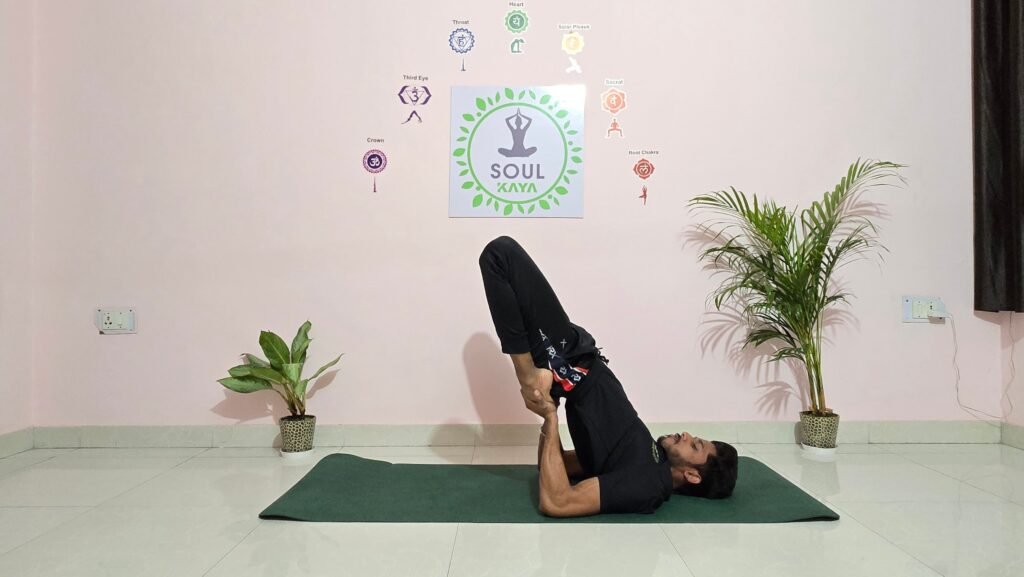
1. Therapeutic Movement (Āsana)
Movements are selected and adapted to:
Restore joint mobility
Improve postural alignment
Strengthen stabilizing muscles
Reduce mechanical stress on the spine and joints
The emphasis is on functional movement, not flexibility alone.
2. Breath Regulation (Prāṇāyāma)
Breathing patterns directly influence:
Stress hormones
Heart rate variability
Oxygen utilization
Nervous system balance
Therapeutic breathing practices are tailored to calm overactivation rather than stimulate performance.
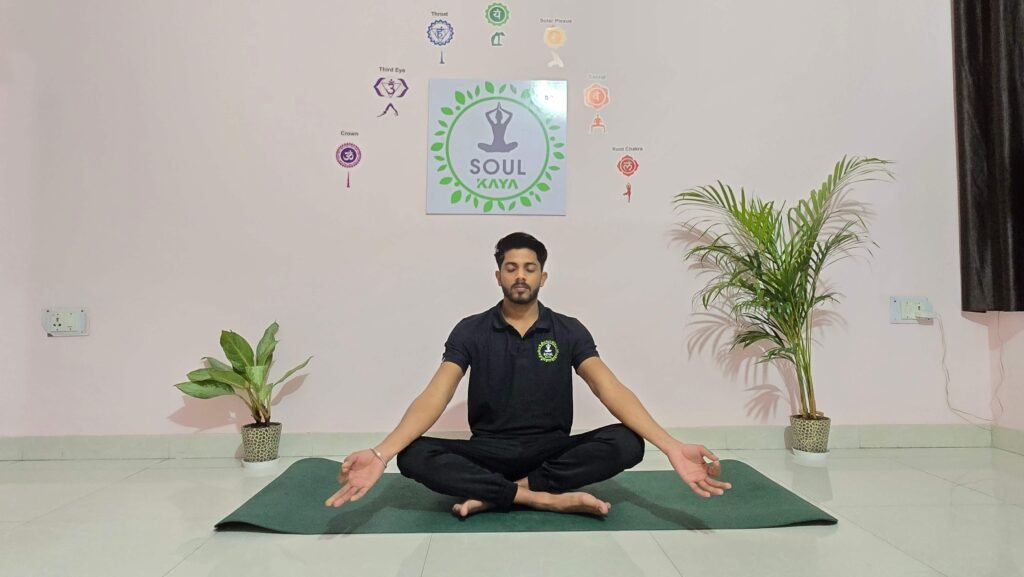
3. Neuro-Psychological Regulation (Dhyāna & Mindfulness)
Mindfulness practices help:
Reduce cognitive overload
Improve emotional regulation
Break stress–pain cycles
Enhance self-awareness
This supports both mental health and physical recovery.
4. Lifestyle Correction (Dinacharya & Habits)
Daily routines play a decisive role in health outcomes. Lifestyle Yoga Therapy addresses:
Sleep–wake timing
Sitting and working posture
Screen exposure habits
Stress responses
Eating patterns (without extreme dietary rules)
Together, these elements create systemic regulation, not isolated improvements.
How Lifestyle Yoga Therapy Differs from General Yoga Practice
Lifestyle Yoga Therapy does not aim to push the body.
It aims to re-educate the system.
| General Yoga Practice | Lifestyle Yoga Therapy |
|---|---|
Fitness or flexibility focused |
Health-condition focused |
Same practice for all |
Assessment-based protocols |
Short-term benefits |
Long-term lifestyle adaptation |
Often performance-driven |
Function and regulation-based |
Scientific Foundations of Lifestyle Yoga Therapy
1. Neurophysiological Regulation
Chronic stress leads to prolonged activation of the sympathetic nervous system (SNS). This state is associated with:
Elevated cortisol
Impaired digestion
Sleep disruption
Anxiety and fatigue
Lifestyle Yoga Therapy emphasizes:
Slow breathing (≤6 breaths per minute)
Prolonged exhalation
Gentle, mindful movement
These techniques activate the parasympathetic nervous system (PNS), improving heart rate variability and stress resilience.
Research from the National Center for Complementary and Integrative Health shows that yoga-based breathing and mindfulness practices significantly reduce stress biomarkers and improve autonomic balance.
2. Musculoskeletal & Postural Science
Modern lifestyle habits—prolonged sitting, forward-head posture, limited spinal movement—contribute to:
Chronic neck and lower back pain
Joint degeneration
Reduced proprioception
Muscle imbalance
Lifestyle Yoga Therapy applies principles from functional movement science:
Spinal segmentation
Joint-specific mobility
Load-appropriate strengthening
This restores neuromuscular coordination rather than merely stretching tight muscles.
3. Respiratory Efficiency
Stress and poor posture often lead to shallow, thoracic breathing. This reduces oxygen efficiency and increases fatigue.
Therapeutic pranayama:
Improves tidal volume
Enhances CO₂ tolerance
Supports cellular metabolism
Studies indexed in PubMed show improved pulmonary function and reduced anxiety through regulated yogic breathing.
4. Endocrine & Metabolic Balance
Irregular routines disrupt circadian rhythms, affecting:
Insulin sensitivity
Thyroid regulation
Appetite hormones
Energy metabolism
Lifestyle Yoga Therapy supports:
Stable daily rhythms
Nervous-system-mediated hormonal balance
Metabolic regulation without extreme interventions
This aligns with principles of lifestyle medicine.
Holistic Wellness Through Yoga – Beyond Symptom Management
Lifestyle Yoga Therapy works on five interconnected layers of human functioning, aligned with the pañca-kośa framework:
Annamaya (Physical): posture, movement, pain
Prāṇamaya (Energy): breath, fatigue, vitality
Manomaya (Mental): stress, anxiety, habits
Vijñānamaya (Cognitive): awareness, clarity, decision-making
Ānandamaya (Behavioral Integration): consistency, well-being
This layered understanding explains why yoga for modern lifestyle issues is most effective when practiced therapeutically rather than casually.
Conditions Where Lifestyle Yoga Therapy Is Commonly Applied
Lifestyle Yoga Therapy is often used as a supportive approach for:
Chronic back, neck, and joint pain
Stress-related disorders
Digestive dysfunction
Sleep disturbances
Metabolic imbalance
Psychosomatic symptoms
Workplace-related musculoskeletal issues
It is important to emphasize that Lifestyle Yoga Therapy does not replace medical treatment. It complements conventional healthcare by addressing behavioral and functional contributors to disease.
Assessment-Based Therapeutic Approach
A defining feature of Lifestyle Yoga Therapy is assessment before intervention. This may include:
Postural and movement analysis
Breathing pattern observation
Stress and sleep history
Daily routine evaluation
Based on this assessment, practices are prescribed—not generalized—ensuring safety, relevance, and effectiveness.
Why Lifestyle Yoga Therapy Is Especially Relevant Today
Modern healthcare systems face growing challenges:
Rising chronic disease burden
Increasing healthcare costs
Over-reliance on symptom-based solutions
Limited preventive education
Lifestyle Yoga Therapy empowers individuals to understand how daily choices affect physiology. This fosters autonomy, self-regulation, and long-term adherence—key factors in sustainable health improvement
Integration with Modern Health Science
Lifestyle Yoga Therapy aligns closely with:
Preventive medicine
Lifestyle medicine
Functional movement science
Mind–body medicine
Institutions such as Harvard Medical School recognize yoga and mindfulness as effective adjuncts in managing lifestyle-related health conditions.
Limitations and Ethical Practice
A responsible, scientific yoga practice must:
Avoid exaggerated or curative claims
Respect medical boundaries
Encourage professional referrals when necessary
Remain evidence-informed, not belief-driven
Lifestyle Yoga Therapy is most effective when guided by trained yoga therapists with sound anatomical, physiological, and psychological understanding.
Frequently Asked Questions
Lifestyle Yoga Therapy is a structured approach that uses yoga, breathwork, mindfulness, and daily habit correction to address health problems caused by modern lifestyle patterns such as prolonged sitting, stress, poor sleep, and lack of movement. It focuses on long-term balance rather than temporary relief.
Regular yoga classes often follow a general format focused on fitness or flexibility. Lifestyle Yoga Therapy is assessment-based and individualized, addressing posture, breathing patterns, stress responses, and daily routines that contribute to health issues.
Yes. Lifestyle Yoga Therapy integrates traditional yogic principles with modern health science, including nervous system regulation, functional movement science, stress physiology, and lifestyle medicine concepts. Many of its practices are supported by research in mind–body health.
Lifestyle Yoga Therapy emphasizes breath regulation, nervous system balance, and mindfulness practices that support stress management and emotional regulation. These practices can help individuals better cope with chronic stress and mental fatigue.
Yes. It is commonly applied to address posture-related discomfort, spinal stiffness, and musculoskeletal issues caused by sedentary habits. Practices are designed to improve movement quality, posture awareness, and muscular balance.
No. Lifestyle Yoga Therapy is a supportive and complementary approach. It does not replace medical diagnosis or treatment. Individuals with medical conditions should consult healthcare professionals alongside any lifestyle-based practices.
Lifestyle Yoga Therapy can benefit working professionals, students, homemakers, older adults, and anyone experiencing lifestyle-related health challenges such as stress, fatigue, poor posture, or movement-related discomfort.
Yes. Lifestyle Yoga Therapy is suitable for beginners because practices are gentle, progressive, and adapted to individual capacity. No prior yoga experience or flexibility is required.
Consistency is more important than intensity. Short, regular daily practices are generally more effective than occasional long sessions, especially for supporting long-term lifestyle balance and functional health.
Yes. Breath regulation (prāṇāyāma) is a core component. It supports nervous system balance, stress reduction, and respiratory efficiency, which are essential for overall well-being.
Lifestyle Yoga Therapy addresses sleep indirectly by regulating stress responses, breathing patterns, and daily routines. These factors play a significant role in improving sleep quality and rhythm.
Is Lifestyle Yoga Therapy only physical, or does it include mental well-being?
Many individuals notice improvements in body awareness, relaxation, and movement comfort within a few weeks of consistent practice. Long-term benefits develop gradually through sustained lifestyle changes.
Yes. With proper guidance, Lifestyle Yoga Therapy can be effectively practiced through structured online sessions that emphasize safety, clarity, and progressive learning.
The main goal is to help individuals understand and correct lifestyle patterns that affect health, enabling long-term self-regulation, resilience, and functional well-being rather than relying solely on symptomatic solutions.
Conclusion
Lifestyle Yoga Therapy represents a mature evolution of yoga—one that responds intelligently to modern health challenges. Rooted in classical yogic wisdom and supported by contemporary science, it offers a holistic yet practical framework for addressing lifestyle-induced disorders.
By integrating movement, breath, stress regulation, and daily habits, this approach shifts healthcare from reactive treatment to proactive self-regulation. In an era dominated by speed, stress, and disconnection, Lifestyle Yoga Therapy restores balance not by adding more effort—but by correcting the way we live.
Founder, Yoga Therapist & Ayurvedic Nutrition Guide at SoulKaya
Atul Gautam works with individuals and families to support lifestyle balance through structured yoga practice, breathwork, and supportive nutrition principles, focusing on long-term consistency and sustainable health habits.
Last updated: January 2026
References
World Health Organization – Noncommunicable Diseases
https://www.who.int/news-room/fact-sheets/detail/noncommunicable-diseasesNational Center for Complementary and Integrative Health – Yoga Research
https://www.nccih.nih.gov/health/yogaPubMed – Yoga and Stress Physiology
https://pubmed.ncbi.nlm.nih.gov/?term=yoga+stressHarvard Health Publishing – Yoga and Mind–Body Health
https://www.health.harvard.edu/topics/yoga