Author name: Atul Gautam

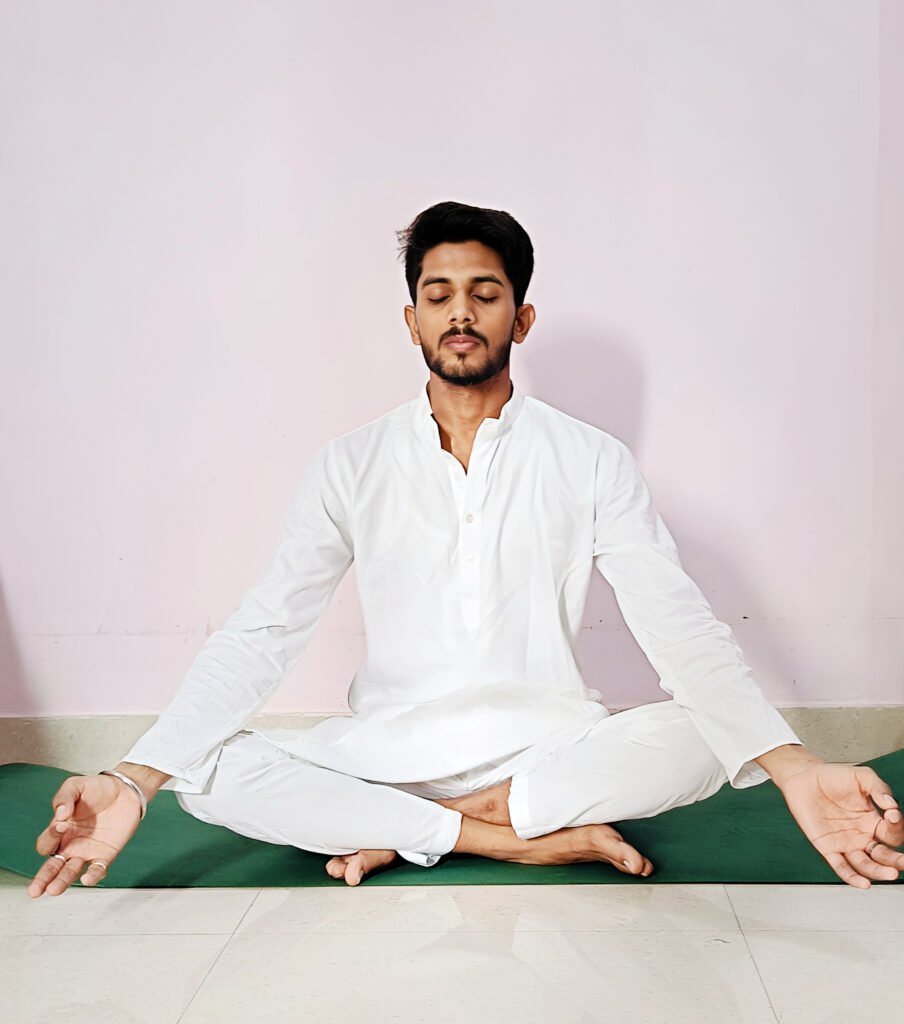
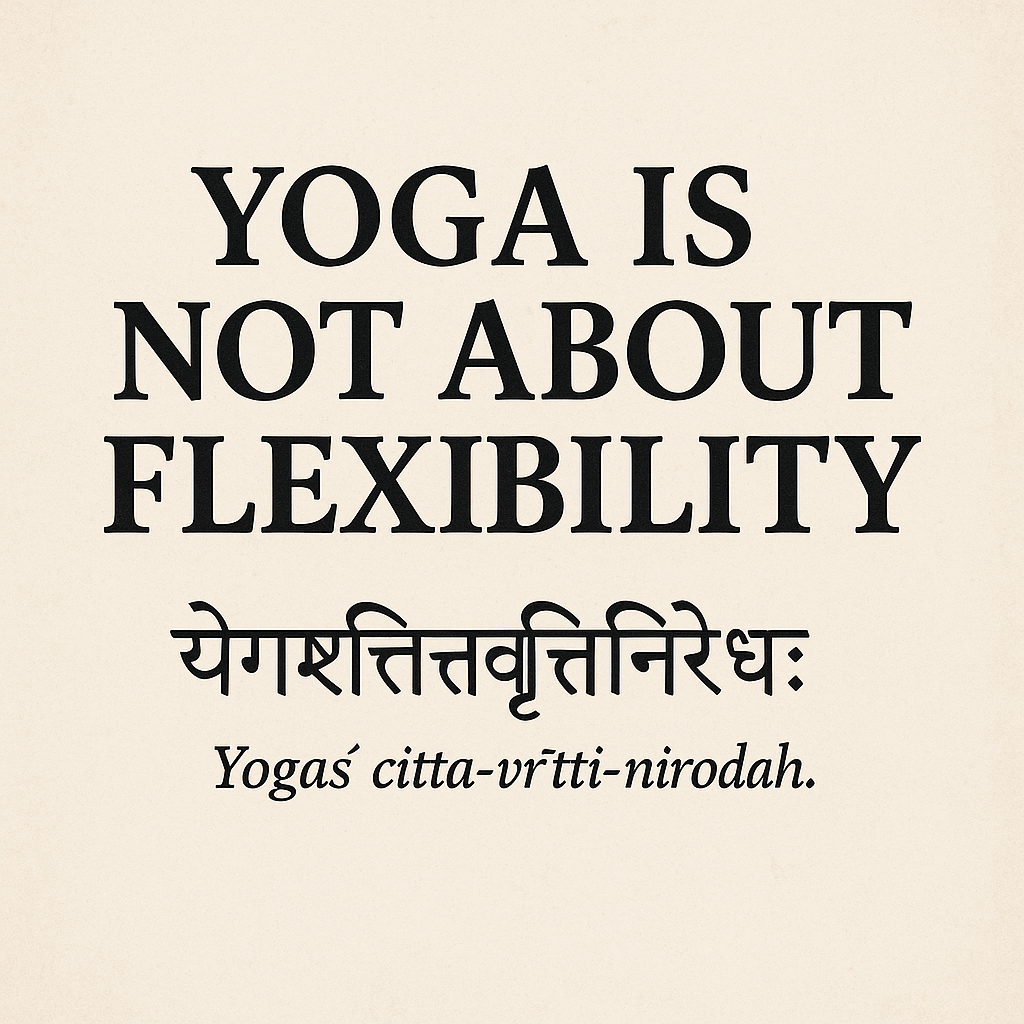
this picture shows yoga is not about flexibility
Blog

The Forgotten Meaning of Yoga: Beyond Asanas and Flexibility

Yoga Is NOT About Flexibility Yoga Isn’t What You Think When most people hear the word yoga, they imagine extreme flexibility, acrobatic postures, and Insta-perfect shapes.But this is a modern misunderstanding. Historically — in the Vedas, Upanishads, Bhagavad Gītā, Yoga Sūtra, Haṭha Yoga texts — yoga was never about touching your toes.It was a psychological discipline, a method of mental purification, and a science of consciousness. Flexibility of the hamstrings is optional.Flexibility of the mind is essential. 1. Flexibility Is Not the Goal of Yoga Classical texts are very clear: Yoga is a mental discipline Most ancient texts mention only a few basic postures — mainly for sitting steadily during meditation. Haṭha Yoga Pradīpikā — Chapter 1 Even though this is considered a physical-practice text, it lists very few āsanas and immediately shifts the focus to prāṇāyāma and dhyāna. “Haṭhasya prathamāṅgaṁ tu āsanaṁ pūrvam ucyate.”Haṭha Yoga begins with āsana — but only as a preparation (for higher limbs).— HYP 1.17 In the same chapter, Svātmārāma states the goal: “Āsanaṁ sthairyamarogyaṁ cāṅga-lāghavaṁ.”Āsana is for stability, health, and lightness of limbs — not flexibility.— HYP 1.19 2. What Yoga Sūtra 1.2 Actually Says Patañjali — the authority for classical yoga — defines yoga in one sentence: “योगश्चित्तवृत्तिनिरोधः”Yogaś citta-vṛtti-nirodhaḥ.— Yoga Sūtra 1.2 Meaning:Yoga is the stilling, regulating, and mastering of the fluctuations of the mind. Nothing about flexibility.Nothing about performing poses. This single sūtra proves:Yoga = Psychology + Mind Training, not gymnastics. 3. Bhaagavad Gītā — Yoga as Equanimity, Mind Control & Skillful Living The Gītā mentions yoga more than 100 times — never as a stretching exercise. Gītā 2.48 — Yoga is equanimity “योगस्थः कुरु कर्माणि… समत्वं योग उच्यते।”Established in yoga, perform action.Equanimity is called yoga. Gītā 6.23 — Yoga is freedom from mental disturbances “तं विद्यात् दुःखसंयोगवियोगं योगसंज्ञितम्।”Yoga is the disconnection from union with suffering. Gītā 6.12 — Purpose of seat (āsana) “तत्रैकाग्रं मनः कृत्वा…”The purpose of the seat is to make the mind one-pointed. Again — yoga = mental mastery. 4. Gheranda Samhita — Yoga as a 7-Step System of Purification Gheraṇḍa Muni describes yoga as sapta-sādhana, a 7-stage process: Śodhana — purification Dṛḍhatā — strengthening Sthiratā — steadiness Mūrtitva — lightness of body Pratyakṣa — control of senses Dhyāna — meditation Samādhi — absorption Only one chapter is on āsana. Gherand Samhita 2.1 “Āsanaṁ sthirataṁ kurute.”Āsana creates steadiness. Steadiness — not flexibility. 5. Vedic & Upanishadic View — Yoga as Inner Union Katha Upanishad 6.11 “यदा पञ्चावतिष्ठन्ते…”When all the senses are at rest, the mind becomes still — this is the highest yoga. Shvetāshvatara Upanishad 2.10 “यो योगेनात्मानं वेत्ति…”One who knows the Self through yoga… The Vedas talk about self-realization, not performing poses. 6. Why Ancient Yogis Practiced Minimal Postures All classical sources agree: The body must be stable Breath must be regulated Mind must be quiet Consciousness must be elevated Advanced postures are not required for this. Most ancient yogis practiced: Sukhasana Padmasana Vajrasana — primarily to sit for 1–2 hours without discomfort during meditation. 7. Modern Science Now Agrees With Ancient Yoga Modern research consistently shows that yoga’s primary benefits are mental & nervous-system based — not flexibility based. Harvard Medical School Yoga reduces stress, improves emotional regulation, and supports the parasympathetic nervous system.Link: https://www.health.harvard.edu/staying-healthy/yoga-benefits-beyond-the-mat Frontiers in Psychology Yoga improves cognitive control, reduces anxiety, and balances the autonomic system.Link: https://www.frontiersin.org/articles/10.3389/fpsyg.2019.00620/full NIH / NCCIH Research shows yoga helps with stress, back pain, anxiety, and mental well-being — not flexibility alone.Link: https://www.nccih.nih.gov/health/yoga-what-you-need-to-know Ancient yogis knew this thousands of years ago. 8. Why “Not Flexible” Means Nothing About Your Yoga Practice If you’re stiff — congratulations. You’re the exact person yoga was originally designed for. Classical yoga only demands: A steady seat A calm breath A stable mind Flexibility is a side-effect, not a requirement. Yoga doesn’t care how far you bend.Yoga cares whether your mind wavers.  Conclusion: Yoga Is a Mind Discipline — Not a Flexibility Contest Across all texts — Veda, Upanishad, Gītā, Yoga Sūtra, Haṭha Yoga Pradīpikā, Gheraṇḍa Samhita — the message is the same: Yoga is mastery of the mind. Flexibility is optional. If you can’t touch your toes, you are still 100% capable of practicing and benefiting from yoga. If anything — stiff people often learn yoga faster because they focus on the essence, not the aesthetics.  REFERENCES (SOLID, RELIABLE, EDUCATIONAL) Primary Texts Yoga Sūtra 1.2 — Yoga is mind-regulation Haṭha Yoga Pradīpikā 1.17–1.19 — Asana is for stability Bhagavad Gita 2.48, 6.12, 6.23 — Yoga is equanimity & mental mastery Gheranda Samhita 2.1 — Asana creates steadiness Katha Upanishad 6.11 — Yoga is stillness of senses Shvetashvatara Upanishad 2.10 — Yoga as self-knowledge Modern Scientific Research Harvard Medical School — Yoga & mind-body benefitshttps://www.health.harvard.edu/staying-healthy/yoga-benefits-beyond-the-mat Frontiers in Psychology — Yoga & emotional/cognitive regulationhttps://www.frontiersin.org/articles/10.3389/fpsyg.2019.00620/full NIH / NCCIH — Evidence-based yoga benefitshttps://www.nccih.nih.gov/health/yoga-what-you-need-to-know  
Yoga

Yoga Nidra vs Deep Sleep: What the Brain Waves Reveal

Yoga Nidra vs Deep Sleep: What the Brain Waves Reveal Abstract Yoga Nidra (“yogic sleep”) is often compared to deep sleep because both states induce profound relaxation. But modern neuroscience shows that their brain-wave patterns are not identical. Deep sleep is dominated by synchronized delta waves across the brain, while Yoga Nidra creates a unique hybrid state where theta and localized delta activity appear alongside conscious awareness. Recent EEG, fMRI and sleep-research studies — including work published in Nature Communications and PNAS — reveal how these two states differ in brain restoration, awareness, and recovery functions. This blog summarizes the scientific findings and explains what the differences mean for mental health, stress recovery, and therapeutic yoga practice. 1. Introduction Yoga Nidra and deep sleep are two powerful restorative states, but how similar are they from a scientific perspective? Both can bring deep rest, yet their brain-wave signatures tell very different stories. If you teach Yoga Nidra or practice it for stress management, understanding these differences can help you explain its benefits accurately to your clients.   This article breaks down the brain waves, the research, and the practical relevance — in simple language but with strong scientific backing. 2. What Happens in Deep Sleep (Non-REM Slow-Wave Sleep)? Deep sleep (N3 stage) is marked by delta waves (0.5–4 Hz), which are slow, high-amplitude oscillations seen across the entire cortex. These waves indicate that large groups of neurons are synchronously switching between active and inactive phases. Science Says: Deep sleep is essential for brain recovery and plasticity.A 2017 study in Nature Communications showed that disturbing slow-wave sleep reduces learning capacity the next day. Deep sleep also triggers cerebrospinal fluid (CSF) flow, which helps remove metabolic waste from the brain. The brain is largely unconscious; waking someone from deep sleep is difficult. 3. What Happens in Yoga Nidra? Yoga Nidra guides the practitioner into a deeply relaxed but aware state. EEG and fMRI research shows that this state is not identical to sleep, but instead a hybrid of wakefulness + localized sleep-like activity. Key Findings: Local Sleep Phenomenon:A 2022 EEG study found that during Yoga Nidra, some brain areas show slow-wave (delta) activity, while others remain alert. Theta Dominance:Early phases of Yoga Nidra show increased theta waves (4–7 Hz), similar to the transition between wakefulness and sleep. Awareness Remains ON:An IIT-AIIMS fMRI study (2024) found continued activity in the thalamus and language-processing regions, meaning the practitioner remains conscious of guidance. Improved Emotional Processing:The same study found increased connectivity in brain networks associated with emotional regulation. In simple words: Yoga Nidra puts parts of your brain to sleep while keeping your awareness awake. Yoga Nidra vs Deep Sleep Feature Deep Sleep (N3) Yoga Nidra Consciousness Unconscious Aware & listening Brain Waves Widespread delta Theta + localized delta Purpose Biological repair Deep conscious relaxation Body State Metabolism & heart rate drop significantly Deep relaxation but easier to wake Awakening Threshold Very difficult Easy 5. What the Brain-Wave Evidence Really Reveals Yoga Nidra mimics some qualities of deep sleep (theta → delta transition). But only deep sleep triggers full-brain slow-wave activity required for neurological repair and CSF cleaning. Yoga Nidra is best understood as “conscious deep rest” — powerful, restorative, and scientifically valid, but not a substitute for actual sleep. Practical Takeaways 20–30 minutes of Yoga Nidra can produce relaxation comparable to 2 hours of light sleep. Yoga Nidra is excellent for: stress recovery anxiety emotional regulation improving sleep quality Use Yoga Nidra as a tool for clients who struggle to relax or fall asleep. For complete restoration, make sure clients aim for 7–8 hours of total sleep, as deep sleep cannot be replaced. Conclusion Yogic stillness offers a grounded, accessible and scientifically validated method for improving focus and emotional balance. With evidence from neuroimaging, psychophysiology and behavioural research, it is clear that the practice contributes to measurable changes in brain structure and function. From improving executive control to reducing mind-wandering, stillness stands as a valuable tool for modern wellbeing, supported by both ancient wisdom and contemporary science. Thank You for Reading Facebook Linkedin Youtube Instagram Whatsapp Thank you for taking the time to understand the science behind Yoga Nidra and deep sleep.Awareness is the first step toward deeper healing and better rest. Want to experience Yoga Nidra the scientific way? Join my Online Yoga Nidra & Deep Relaxation Sessions Reduce stress Improve sleep Calm the nervous system Available for one-on-one or group  DM me or visit my Soul Kaya website to book a session. https://youtube.com/shorts/o2dUawydgRY?si=WkF1BytjnDbqSb8bhttps://youtube.com/shorts/f_8YL9LMoeQ?si=fEHq9EwAd7K5C-bu References Deep Sleep Research Fattinger et al., Nature Communications (2017)Deep sleep maintains learning efficiency🔗 https://www.nature.com/articles/ncomms15405 Uji et al., PNAS (2025)Human deep sleep drives cerebrospinal fluid dynamics🔗 https://www.pnas.org/doi/10.1073/pnas.2509626122 StatPearls / NCBI – Sleep Stages Overview🔗 https://www.ncbi.nlm.nih.gov/books/NBK526132/ Yoga Nidra Research   Datta K. et al., EEG Local Sleep During Yoga Nidra, 2022🔗 https://www.ncbi.nlm.nih.gov/pmc/articles/PMC9315270/ IIT Delhi + AIIMS Delhi fMRI Study (2024)🔗 https://home.iitd.ac.in/show.php?id=237 Shashikiran et al., YOMI Journal (2022)🔗 https://journals.lww.com/yomi/fulltext/2022/54010/effect_of_yoga_nidra_on_the_brain_activity_in.4.aspx Parker S., Elsevier / Physiology & Behavior (2019)🔗 https://www.sciencedirect.com/science/article/abs/pii/S0079612318301559

Neurobiological Effects of Yogic Stillness
Yoga

How Yogic Stillness Rewires Your Brain for Focus

How Yogic Stillness Rewires the Human Brain for Focus: A Research-Informed Exploration Abstract Yogic stillness, traditionally practiced within Indian yogic systems, has recently gained significant attention within neuroscience and psychology. Contemporary research demonstrates that mindful stillness and meditative awareness positively influence brain structure, neurochemistry, and cognitive functioning. This article synthesizes findings from peer-reviewed studies, books, theses, and government-recognized international scientific bodies to explain how yogic stillness enhances focus, emotional stability, and neuroplasticity. The discussion is presented in a research-inspired, reader-friendly manner for practitioners, students, and wellness professionals. 1. Introduction In recent years, the intersection between traditional yogic practices and neuroscience has emerged as a compelling field of study. Yogic stillness—defined as intentional physical steadiness combined with mental awareness—has long been described in ancient texts such as Patanjali’s Yoga Sutra as a pathway to clarity and concentration. Modern neuroscience now supports these ancient observations, showing measurable structural and functional changes in the brain during and after meditative stillness (Tang et al., 2015; Hölzel et al., 2011). With rising global stress levels and widespread attention difficulties, understanding how yogic stillness enhances cognitive performance has real-world implications for mental health and human productivity. This article integrates insights from established research to explain how stillness “rewires” the brain for focus. 2. Understanding Yogic Stillness Yogic stillness refers to a steady, comfortable posture (sthira sukham asanam) combined with conscious, non-reactive awareness. It is neither the suppression of thoughts nor rigid physical immobility. Instead, it is an intentional slowing down of mental fluctuations, supported by relaxed breathing and inner observation (Feuerstein, 2008). Stillness activates a shift from habitual reactivity to mindful presence, a state associated with improved emotional regulation and attentional control (Kabat-Zinn, 2003). 3. Neurobiological Effects of Yogic Stillness 3.1 Strengthening the Prefrontal Cortex The prefrontal cortex (PFC) is responsible for executive functions such as focus, planning, decision-making and impulse control. Neurological research shows that meditation increases PFC activation and cortical thickness, leading to improved attention regulation (Lazar et al., 2005; Tang et al., 2015). Regular stillness practices enhance top-down control, allowing individuals to concentrate more effectively and return attention to tasks with less mental fatigue. 3.2 Reduction of Default Mode Network (DMN) Activity The Default Mode Network becomes active during mind-wandering, worry and rumination. Studies indicate that meditation significantly reduces DMN activity, thereby decreasing internal mental noise and improving present-moment focus (Brewer et al., 2011). This reduction in spontaneous thinking contributes directly to sustained concentration. 3.3 Structural and Functional Neuroplasticity Meditation increases grey matter density in regions linked to memory, empathy, sensory processing and self-awareness (Hölzel et al., 2011). White-matter integrity also improves, suggesting enhanced communication between brain regions involved in attention and emotion regulation (Tang et al., 2010). Advanced neuroimaging further reveals that long-term meditation leads to higher neural complexity—a hallmark of greater brain adaptability and efficiency (Atad et al., 2025). 3.4 Emotional Regulation and Stress Reduction Stillness reduces amygdala activation—the brain’s centre for fear and stress—resulting in improved emotional resilience (Hölzel et al., 2011). Moreover, mindfulness-based interventions lower cortisol secretion, contributing to calmer physiological states (Calderone et al., 2024). These emotional shifts directly support cognitive clarity and reduce distraction. 4. Psychophysiological Mechanisms Supporting Focus 4.1 Enhanced Parasympathetic Activation Yogic stillness activates the parasympathetic nervous system, which slows heart rate, relaxes muscles and stabilises breathing. Increased vagal tone is associated with improved attention control and reduced mental fatigue (Porges, 2007). 4.2 Improved Interoceptive Awareness Stillness enhances activity in the insula, improving awareness of internal bodily signals. This increased interoception helps practitioners recognise early signs of stress or distraction and return attention to the task at hand (Farb et al., 2007). 4.3 Reduced Cognitive Load By calming internal thought loops, stillness reduces the brain’s cognitive load. A quieter mind can allocate more resources to executive functioning, improving focus quality (Mrazek et al., 2013). 5. Practical Application: Integrating Stillness Into Daily Life A simple 5–10-minute daily stillness routine can meaningfully shift cognitive performance: Sit comfortably with a straight spine. Relax the shoulders and soften facial muscles. Observe natural breathing. Allow thoughts to arise and pass without interference. Gently return attention to the breath each time the mind wanders. Consistent practice produces cumulative neuroplastic changes that support long-term focus. Discussion The convergence of yogic philosophy and contemporary brain science demonstrates that stillness is not passive inactivity but a form of cognitive training. Through neuroplastic mechanisms, stillness enhances attentional systems, reduces stress-based interference, and supports a healthier, more coherent brain. This strengthens the argument for incorporating non-pharmacological interventions such as yogic stillness into public health frameworks and therapeutic settings. Conclusion Yogic stillness offers a grounded, accessible and scientifically validated method for improving focus and emotional balance. With evidence from neuroimaging, psychophysiology and behavioural research, it is clear that the practice contributes to measurable changes in brain structure and function. From improving executive control to reducing mind-wandering, stillness stands as a valuable tool for modern wellbeing, supported by both ancient wisdom and contemporary science. Thank You for Reading Thank you for taking the time to read this article. I’d love to hear your thoughts, reflections, or personal experiences on yogic stillness—feel free to share them in the comments. If you found this valuable, please share it with someone who may benefit. For more research-based insights on yoga, mindfulness, and well-being, do follow me on social media: Visit www.soulkaya.com to begin your energy balancing journey today. Facebook Linkedin Youtube Instagram Whatsapp https://youtube.com/shorts/o2dUawydgRY?si=WkF1BytjnDbqSb8bhttps://youtube.com/shorts/f_8YL9LMoeQ?si=fEHq9EwAd7K5C-bu References (All sources are peer-reviewed, internationally recognised, or government/academic supported.) Atad, O. et al. (2025). Meditation and complexity: A review and synthesis of evidence. Neuroscience of Consciousness. https://doi.org/10.1093/nc/niaf013 Brewer, J. A. et al. (2011). Meditation experience is associated with altered default mode network activity. PNAS. https://doi.org/10.1073/pnas.1112029108 Calderone, A. et al. (2024). Neurobiological Changes Induced by Mindfulness and Meditation. Frontiers in Psychology. https://doi.org/10.3389/fpsyg.2024.1330160 Farb, N. A. et al. (2007). Attending to the present: Mindfulness meditation reveals distinct neural modes. Social Cognitive and Affective Neuroscience. https://doi.org/10.1093/scan/nsm030 Feuerstein, G. (2008). The Yoga Tradition. Hohm Press. Hölzel, B. K. et al. (2011). Mindfulness practice leads to increases in regional brain gray matter

Yoga

Brahmacharya Beyond Celibacy – Energy Conservation Explained Scientifically

In modern times, the word Brahmacharya is often misunderstood as mere celibacy or sexual abstinence. But in yogic philosophy, Brahmacharya is much more than that. It is a principle of energy management — living in awareness, moderation, and purpose. It is not about suppressing desires, but about directing your vital force (Prana) toward growth, clarity, and higher creativity. 1. The True Meaning of Brahmacharya The word Brahmacharya comes from two Sanskrit words: So, Brahmacharya literally means “to move in the direction of Brahman” — to live in harmony with your higher nature. In ancient India, students (brahmacharis) practiced this discipline to keep their body, mind, and senses pure so that they could focus on learning and self-growth. Celibacy was just one part of it — the bigger goal was to save energy and use it wisely. Today, whether you are a student, a professional, or a spiritual seeker, this principle is still relevant — because in every stage of life, how you spend or conserve your energy decides your growth and peace of mind. 2. The Yogic Understanding of Energy Conservation According to yogic science, the human body is not just a collection of muscles and bones — it’s a field of energy. This energy (Prana) flows through subtle channels called Nadis. When Prana is balanced, we feel strong, focused, and calm. When it leaks or becomes scattered through uncontrolled desires, sensory indulgence, or stress, we feel tired, anxious, and distracted. Yogic texts also talk about Ojas, the refined form of vital energy. Ojas is said to be formed from the deepest nourishment of the body and mind. It gives you strength, immunity, and mental clarity. When you conserve your energy (physical, sexual, and mental), you protect and increase Ojas — your body’s inner glow and resilience. So, Brahmacharya is not about denying pleasure; it’s about protecting your Ojas by living with balance and awareness. 3. Scientific View – The Logic Behind Energy Conservation Modern science may not use terms like Prana or Ojas, but it recognizes that our energy system is directly linked to hormones, neurotransmitters, and metabolism. When we engage in excessive sensory stimulation — too much screen time, overthinking, anxiety, anger, or even overeating — our nervous system stays in “fight or flight” mode, consuming large amounts of energy and hormones like adrenaline and cortisol. This constant over-activation drains the nervous system, leading to fatigue, low mood, and poor focus. On the other hand, self-control and moderation (the essence of Brahmacharya) activate the parasympathetic nervous system, which promotes healing, stable energy, and clarity of mind. Several studies show that mindfulness, meditation, and controlled breathing (core practices of Brahmacharya lifestyle) help: In short, when you control your impulses, your brain conserves glucose and neurotransmitters — the “fuel” for higher thinking and creativity. Even if we see from a reproductive angle — scientific analysis shows that the energy content of semen or fluid release is very small (around 5–25 calories). So, Brahmacharya isn’t about physical energy loss alone.It’s about the mental and emotional energy we lose through constant craving, distraction, or overindulgence. As the ancient yogis said — “Where attention goes, energy flows.”When your attention is scattered, your energy is drained.When your attention is centered, your energy becomes power. 4. Brahmacharya in Daily Life – The Art of Balance The deeper message of Brahmacharya is balance. It teaches us to live mindfully in a world full of temptations. You don’t need to live like a monk — you only need to live with awareness. Here’s how you can practice Brahmacharya in a modern lifestyle: 1. Mindful Sensory Control Be aware of what you see, read, and consume. Too much stimulation through screens, social media, or entertainment drains mental energy. Practice digital discipline — not suppression, but choice. 2. Regulation of Desires, Not Repression Brahmacharya doesn’t mean denying natural desires. It means expressing them consciously, without addiction or guilt. Moderation keeps energy stable and mind peaceful. 3. Balanced Diet & Sleep In Ayurveda, excessive indulgence in food or irregular sleep is also a form of energy leakage. A sattvic diet, proper rest, and regular routine conserve Prana and support Ojas. 4. Channel Your Energy Through Yoga & Pranayama Physical postures (Asanas) balance the body.Breathing practices (Pranayama) refine Prana.Meditation redirects your energy inward, creating calm awareness. Regular practice helps you transform sexual and sensory energy into creative and spiritual power. 5. Awareness in Relationships In relationships, Brahmacharya means respect, mindfulness, and emotional maturity. It encourages connection that uplifts, not one that drains. 5. Brahmacharya as a Modern Energy Principle When you start observing where your energy goes — mentally, emotionally, and physically — you begin to see how much is wasted in unnecessary thoughts, worries, and desires. By practicing Brahmacharya, you learn to: It’s like managing money — when you spend carelessly, you feel shortage. But when you spend consciously, you feel abundant. Brahmacharya transforms your inner energy from being reactive to responsive, from scattered to centered. 6. The Harmony of Science and Yoga If we connect yogic wisdom and modern science, Brahmacharya can be understood as: “A way of maintaining nervous system balance, conserving mental resources, and promoting neuro-hormonal stability through conscious living.” Modern neuroscience shows that dopamine-driven habits (scrolling, junk food, lust, anger) give temporary pleasure but long-term dullness.Yogic Brahmacharya teaches the opposite — restrain the instant craving to gain long-term vitality and clarity. This harmony of East and West tells us that energy conservation is both spiritual and scientific. The science explains “how” it works; yoga explains “why” it’s essential. 7. The Final Wisdom Brahmacharya is not a restriction; it’s a redirection.It’s about remembering that your energy is sacred — it is your life force, your potential, your Shakti. When you conserve it, you become sharper, calmer, and more magnetic.Your presence becomes powerful, not because of external effort, but because your inner energy is aligned. As Swami Sivananda beautifully said — “The goal of Brahmacharya is not suppression but sublimation — transforming the lower into the higher.”

Ayurveda Insights, Yoga

Tridosha Imbalance and Yoga: Why One Sequence Doesn’t Fit All

Discover how Ayurvedic doshas—Vata, Pitta, and Kapha—influence your yoga practice. Learn why personalized yoga sequences bring true balance, not generic routines. Introduction: Have you ever wondered why a yoga sequence that energizes one person leaves another feeling drained?The answer lies in Ayurveda’s foundation—the Tridosha theory: Vata, Pitta, and Kapha.Just as every person has a unique body type (Prakriti), every yoga practice must align with one’s dosha balance to be truly healing. Understanding the Tridoshas: Dosha Elements Qualities Common Imbalances Vata Air + Ether Light, Dry, Cold, Mobile Anxiety, Insomnia, Constipation Pitta Fire + Water Hot, Sharp, Intense Anger, Acidity, Inflammation Kapha Earth + Water Heavy, Stable, Cool Lethargy, Weight Gain, Congestion When these doshas go out of balance, even a well-intentioned yoga routine can worsen symptoms instead of healing them. Why One Sequence Doesn’t Fit All: Modern yoga often promotes universal flows—like “Morning Yoga” or “Yoga for Energy.”But Ayurveda reminds us: “What is medicine for one person may be poison for another.” For example: Yoga for Each Dosha: 1. Vata Balancing Yoga 2. Pitta Balancing Yoga 3. Kapha Balancing Yoga Scientific Link Between Doshas and Yoga Response: Recent studies show that individualized yoga therapy based on body type or temperament (Ayurvedic concept of Prakriti) improves both autonomic balance and stress resilience more effectively than generalized yoga.👉 Reference: Frontiers in Public Health, 2021 – “Ayurvedic body types and their impact on stress response” Conclusion: Your yoga mat is your medicine table.When you practice with awareness of your dosha balance, every asana becomes a therapy—not just exercise.So next time you step on the mat, ask not “What’s the best yoga sequence?” but “What does my body need today?” Discover your Dosha and get a customized yoga therapy plan.👉 Book your personalized yoga session with Atul Kumar Gautam today. Contact Us: www.soulkaya-com-418185.hostingersite.com

Yoga

Yoga for Students: Focus, Memory, and Stress Relief

Introduction In today’s fast-paced academic life, students face constant pressure from studies, exams, and digital distractions. This often leads to stress, poor concentration, and weak memory.Yoga offers a natural and scientific solution to improve focus, memory retention, and emotional balance, leading to overall academic success. 1. How Yoga Improves Focus and Concentration Yoga activates the prefrontal cortex, the brain region responsible for attention and decision-making.Research published in Frontiers in Psychology (2022) shows that slow yoga breathing improves mental load in working memory performance and supports attention control.🔗 Read the study here Best Yoga Asanas for Focus: 2. Yoga for Better Memory and Learning Regular yoga and breathing techniques increase oxygen and blood flow to the brain, improving memory retention and clarity.A study published in the Journal of Traditional and Complementary Medicine (2019) found that students who practiced yoga daily showed significant improvement in attention, memory, and executive function compared to those who performed physical exercise.🔗 Read the research study Helpful Practices: Another study in Indian Journal of Physiology and Pharmacology (2022) found that yoga improved cognitive function and reduced anxiety in students with low academic performance.🔗 View the study 3. Yoga for Stress Relief During Exams Exams often bring anxiety, sleepless nights, and mental fatigue. Yoga helps regulate the nervous system and lowers cortisol (stress hormone) levels.A Wiley Online Library study (2016) observed that six weeks of yoga and meditation reduced stress and improved well-being in medical students.🔗 View full study Recent research published in BMC Complementary Medicine and Therapies (2024) also confirmed that regular yoga practice significantly reduces depression, anxiety, and stress levels among students.🔗 Read the study Recommended Poses for Stress Relief: 4. Practical Tips for Students ✅ Practice yoga early morning for 15–20 minutes.✅ Avoid using your phone immediately after yoga — let the mind stay calm.✅ Combine yoga with proper sleep, hydration, and sattvic diet for best results. Conclusion Yoga is not just a physical practice — it’s a scientifically proven mental tool. Even 15 minutes a day can help students stay focused, manage exam stress, and improve memory naturally.Start small, stay consistent, and watch your academic performance transform through the power of yoga. Ready to improve your focus and reduce stress naturally? Join my personalized Yoga Therapy sessions and experience the change.👉 Book Your Free Consultation Now 📚 References

Yoga

Sukhasana + Deep Breathing: The Science of Simple Stillness

Introduction In the fast-paced rhythm of modern life, our nervous system often remains in a constant state of alertness. Simple practices like Sukhasana combined with deep breathing can help the body return to a state of balance. Though the posture looks effortless, its effects on the nervous system, respiration, and mental state are deeply scientific. 1. Understanding Sukhasana Sukhasana is a foundational seated posture that promotes alignment, stability, and comfort. 2. Deep Breathing – The Physiology Behind Calm Deep breathing, scientifically known as diaphragmatic breathing, involves the activation of the diaphragm — the main muscle of respiration.When performed consciously: Physiological benefits: 3. The Synergy of Sukhasana and Deep Breathing When deep breathing is practiced in Sukhasana, the body and mind work in harmony: 4. Scientific Studies and Evidence * Deep Breathing and Blood Pressure Regulation * Diaphragmatic Breathing and Autonomic Nervous System * Slow Breathing and Vagal Activation * Slow Breathing and Cardiovascular Health * Deep Breathing and Workplace Stress * Harvard Health Reference 5. How to Practice Tip: Morning practice in a quiet, well-ventilated space enhances oxygen intake and mental freshness. 6. Therapeutic Applications This simple yet profound combination can help manage: Conclusion Sukhasana with deep breathing is more than a relaxation technique — it is a scientifically validated practice for resetting the body’s physiological balance. Regular practice can bring measurable improvements in heart health, emotional regulation, and overall well-being. 🌿 Sometimes, the simplest posture becomes the most powerful tool for transformation — when the breath becomes your guide. Want to experience calm through yoga therapy?Join Soul Kaya’s Online Yoga Classes and learn how breathwork and posture can transform your health naturally.

Yoga

Yoga for Migraine Relief: Best Asanas, Pranayama & Home Remedies

Migraines are not just “bad headaches.” They are a neurological condition often triggered by stress, irregular lifestyle, poor posture, hormonal changes, or even dietary habits. People with migraines may experience throbbing pain, light sensitivity, nausea, and difficulty concentrating. Modern medicine offers temporary relief through painkillers, but long-term management requires addressing root causes — reducing stress, improving circulation, and maintaining balance in body and mind. Here is where yoga and simple natural remedies can play an important role. How Yoga Helps in Migraine Management Yoga works on both the nervous system and the vascular system. Scientific studies suggest that yoga practices can: When practiced regularly, yoga may not only help during migraine-free days but also reduce the frequency and intensity of attacks. Simple & Safe Yoga Practices for Migraine Relief 1. Balasana (Child’s Pose) 2. Shashankasana (Rabbit Pose / Extended Child’s Pose variation) 3. Viparita Karani (Legs-Up-the-Wall Pose) 4. Sukhasana + Deep Breathing 5. Bhramari Pranayama (Bee Breath) ⚠️ Important: Home Remedies for Migraine Relief Alongside yoga, these simple remedies can help manage or prevent migraine episodes: 1. Hydration & Electrolyte Balance Dehydration is a common trigger. Drink enough water and include natural electrolyte sources like coconut water. 2. Ginger Tea Ginger has anti-inflammatory and anti-nausea properties. A warm cup of ginger tea can reduce headache severity. 3. Peppermint Oil / Balm Applying diluted peppermint oil on temples creates a cooling effect and relaxes muscle tension. 4. Magnesium-Rich Foods Low magnesium levels are linked to migraines. Include nuts, seeds, leafy greens, and whole grains in your diet. 5. Sleep & Meal Regularity Irregular sleep and skipped meals often trigger attacks. Maintain a routine of balanced meals and 7–8 hours of quality sleep. Final Thoughts Migraines need holistic care — not just pills. By combining yoga asanas, pranayama, and simple lifestyle remedies, you can calm your nervous system, improve blood circulation, and reduce migraine triggers naturally. Consistency is the key. Even 15–20 minutes of daily yoga practice, along with mindful hydration and diet, can bring lasting relief. Ready to begin your healing journey?Join Soul Kaya for Online Yoga Classes and experience guided practices designed for stress relief, better health, and a migraine-free life.

Yoga

Sattvic Diet: The Yogic Way of Eating for Mental Clarity

Introduction Yoga is not only about asanas and pranayama — it is also about the food we eat and how it shapes our mind. In yoga philosophy, food is divided into three categories: Sattvic (pure), Rajasic (stimulating), and Tamasic (dulling). Among these, a Sattvic diet is considered the best for maintaining balance, focus, and mental clarity. If you are looking for a simple, holistic, and natural way to support your yoga practice and daily life, the sattvic diet can be the foundation. What is a Sattvic Diet? The word Sattva means purity, harmony, and clarity. A Sattvic diet includes foods that are: In practical terms, this means: Benefits of a Sattvic Diet for Mental Clarity Sattvic Diet in Daily Life – Practical Tips Yoga Connection – Food and Mind Patanjali’s Yoga Sutra emphasizes that a calm mind is essential for meditation. A Sattvic diet directly supports this by reducing disturbances from food. It prepares the body for yoga, meditation, and a balanced lifestyle. Key Takeaway A Sattvic diet is not about strict rules, but about choosing foods that bring lightness, clarity, and peace. By adding simple sattvic habits into your meals, you can experience sharper focus, better energy, and a calmer mind. If you want to align your yoga practice with the right nutrition, start by adding one Sattvic habit to your meals today. Over time, these small changes create a big impact on both body and mind balance.

Yoga

Pranayama and Breathwork: Why Breathing Is the Real Yoga

When most people think of yoga, they imagine bending into complex postures. But at its core, yoga is not about twisting the body — it is about uniting the body, breath, and mind.And the bridge between all three is breath. In fact, ancient yogis described pranayama (breath regulation) as the real essence of yoga. Because without conscious breathing, yoga becomes just physical exercise. 1. Breath is Life 2. Pranayama: The Science of Energy The Sanskrit word Prana = life force energy, Ayama = expansion or control.So pranayama is not just breathing; it’s channeling energy through breath. Modern science supports this: 3. Breath as a Mirror of the Mind Yoga Sutras of Patanjali even state: “When the breath wanders, the mind is unsteady; but when the breath is still, the mind too is still.” 4. Why Breath is the Real Yoga 5. Practical Breath Awareness Tips Conclusion Yoga is not just about touching your toes; it is about touching your breath with awareness.If you make breath your focus, every posture, every moment, becomes yoga.That’s why ancient masters said: “Breathing is the real yoga.” 👉 Call to Action for Blog End:“Want to experience pranayama in a scientific yet traditional way? Join my online sessions with Soul Kaya and explore the power of conscious breathing.

Shopping Cart
Scroll to Top