
Yoga Nidra vs Deep Sleep: What the Brain Waves Reveal
Abstract
Yoga Nidra (“yogic sleep”) is often compared to deep sleep because both states induce profound relaxation. But modern neuroscience shows that their brain-wave patterns are not identical. Deep sleep is dominated by synchronized delta waves across the brain, while Yoga Nidra creates a unique hybrid state where theta and localized delta activity appear alongside conscious awareness. Recent EEG, fMRI and sleep-research studies — including work published in Nature Communications and PNAS — reveal how these two states differ in brain restoration, awareness, and recovery functions. This blog summarizes the scientific findings and explains what the differences mean for mental health, stress recovery, and therapeutic yoga practice.
1. Introduction
Yoga Nidra and deep sleep are two powerful restorative states, but how similar are they from a scientific perspective? Both can bring deep rest, yet their brain-wave signatures tell very different stories. If you teach Yoga Nidra or practice it for stress management, understanding these differences can help you explain its benefits accurately to your clients.
This article breaks down the brain waves, the research, and the practical relevance — in simple language but with strong scientific backing.
2. What Happens in Deep Sleep (Non-REM Slow-Wave Sleep)?
Deep sleep (N3 stage) is marked by delta waves (0.5–4 Hz), which are slow, high-amplitude oscillations seen across the entire cortex. These waves indicate that large groups of neurons are synchronously switching between active and inactive phases.
Science Says:
Deep sleep is essential for brain recovery and plasticity.
A 2017 study in Nature Communications showed that disturbing slow-wave sleep reduces learning capacity the next day.Deep sleep also triggers cerebrospinal fluid (CSF) flow, which helps remove metabolic waste from the brain.
The brain is largely unconscious; waking someone from deep sleep is difficult.
3. What Happens in Yoga Nidra?
Yoga Nidra guides the practitioner into a deeply relaxed but aware state. EEG and fMRI research shows that this state is not identical to sleep, but instead a hybrid of wakefulness + localized sleep-like activity.
Key Findings:
Local Sleep Phenomenon:
A 2022 EEG study found that during Yoga Nidra, some brain areas show slow-wave (delta) activity, while others remain alert.Theta Dominance:
Early phases of Yoga Nidra show increased theta waves (4–7 Hz), similar to the transition between wakefulness and sleep.Awareness Remains ON:
An IIT-AIIMS fMRI study (2024) found continued activity in the thalamus and language-processing regions, meaning the practitioner remains conscious of guidance.Improved Emotional Processing:
The same study found increased connectivity in brain networks associated with emotional regulation.
In simple words:
Yoga Nidra puts parts of your brain to sleep while keeping your awareness awake.
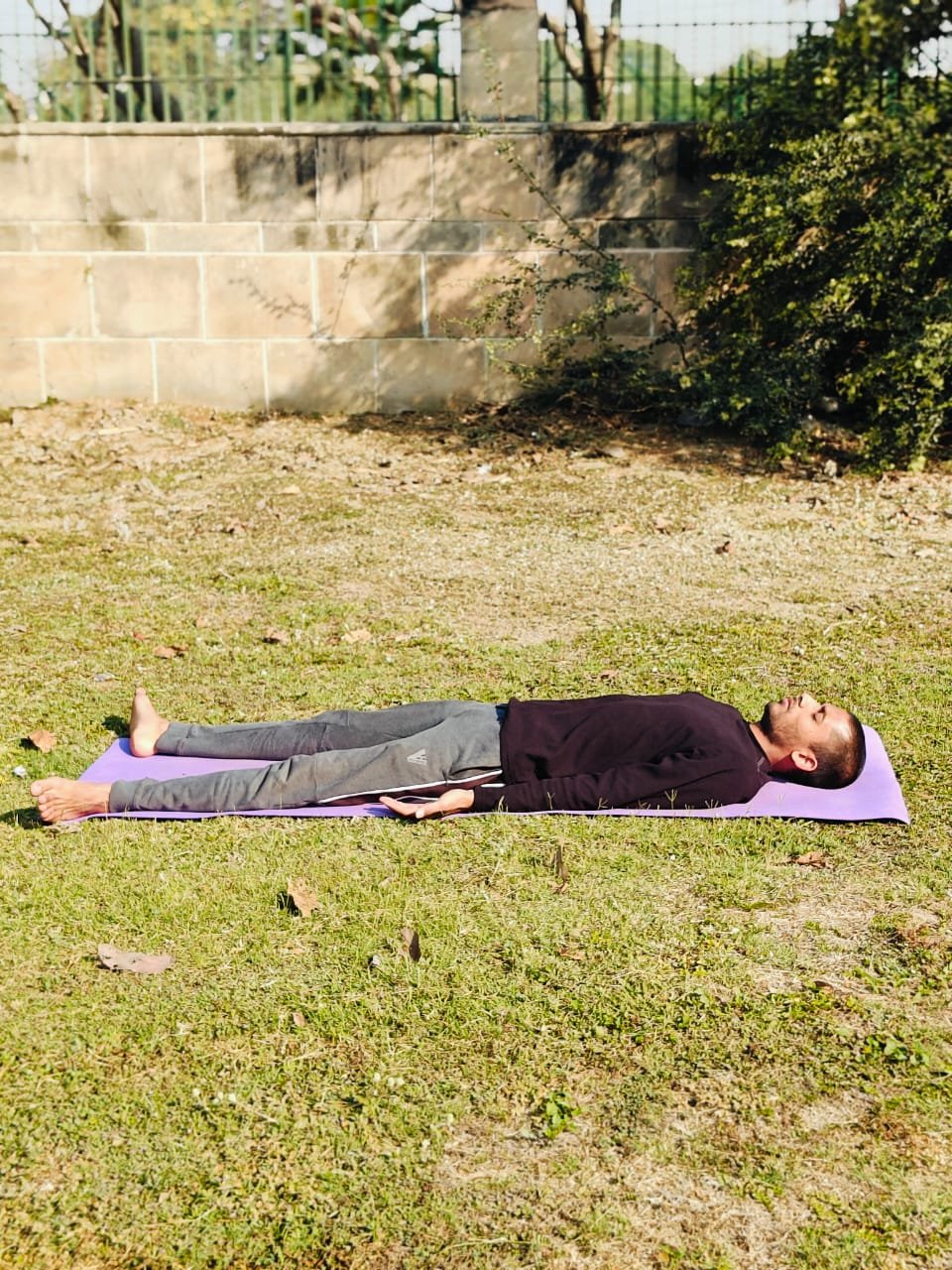

Yoga Nidra vs Deep Sleep
| Feature | Deep Sleep (N3) | Yoga Nidra |
|---|---|---|
| Consciousness | Unconscious | Aware & listening |
| Brain Waves | Widespread delta | Theta + localized delta |
| Purpose | Biological repair | Deep conscious relaxation |
| Body State | Metabolism & heart rate drop significantly | Deep relaxation but easier to wake |
| Awakening Threshold | Very difficult | Easy |
5. What the Brain-Wave Evidence Really Reveals
Yoga Nidra mimics some qualities of deep sleep (theta → delta transition).
But only deep sleep triggers full-brain slow-wave activity required for neurological repair and CSF cleaning.
Yoga Nidra is best understood as “conscious deep rest” — powerful, restorative, and scientifically valid, but not a substitute for actual sleep.
Practical Takeaways
20–30 minutes of Yoga Nidra can produce relaxation comparable to 2 hours of light sleep.
Yoga Nidra is excellent for:
stress recovery
anxiety
emotional regulation
improving sleep quality
Use Yoga Nidra as a tool for clients who struggle to relax or fall asleep.
For complete restoration, make sure clients aim for 7–8 hours of total sleep, as deep sleep cannot be replaced.
Conclusion
Yogic stillness offers a grounded, accessible and scientifically validated method for improving focus and emotional balance. With evidence from neuroimaging, psychophysiology and behavioural research, it is clear that the practice contributes to measurable changes in brain structure and function. From improving executive control to reducing mind-wandering, stillness stands as a valuable tool for modern wellbeing, supported by both ancient wisdom and contemporary science.
Thank You for Reading
Thank you for taking the time to understand the science behind Yoga Nidra and deep sleep.
Awareness is the first step toward deeper healing and better rest.
Want to experience Yoga Nidra the scientific way?
Join my Online Yoga Nidra & Deep Relaxation Sessions
- Reduce stress
- Improve sleep
- Calm the nervous system
- Available for one-on-one or group
DM me or visit my Soul Kaya website to book a session.
References
Deep Sleep Research
Fattinger et al., Nature Communications (2017)
Deep sleep maintains learning efficiency
🔗 https://www.nature.com/articles/ncomms15405Uji et al., PNAS (2025)
Human deep sleep drives cerebrospinal fluid dynamics
🔗 https://www.pnas.org/doi/10.1073/pnas.2509626122StatPearls / NCBI – Sleep Stages Overview
🔗 https://www.ncbi.nlm.nih.gov/books/NBK526132/
Yoga Nidra Research
Datta K. et al., EEG Local Sleep During Yoga Nidra, 2022
🔗 https://www.ncbi.nlm.nih.gov/pmc/articles/PMC9315270/IIT Delhi + AIIMS Delhi fMRI Study (2024)
🔗 https://home.iitd.ac.in/show.php?id=237Shashikiran et al., YOMI Journal (2022)
🔗 https://journals.lww.com/yomi/fulltext/2022/54010/effect_of_yoga_nidra_on_the_brain_activity_in.4.aspxParker S., Elsevier / Physiology & Behavior (2019)
🔗 https://www.sciencedirect.com/science/article/abs/pii/S0079612318301559